Let’s Stop Calling it Social Media

There comes a time in the lifecycle of every technology where it’s given a name based on some preconceived notion that the technology itself makes obsolete. For example, the term “horseless carriage” is given to something with the assumption that carriages require a horse, and so, therefore, the thing that sets the “horseless carriage” apart from a “carriage” is that it lacks one. The tern “cordless phone” has this same shortcoming. But does this make sense? At what point do we stop referring to something by its antiquated nomer, and just call it like it is?
Continue reading

My Music

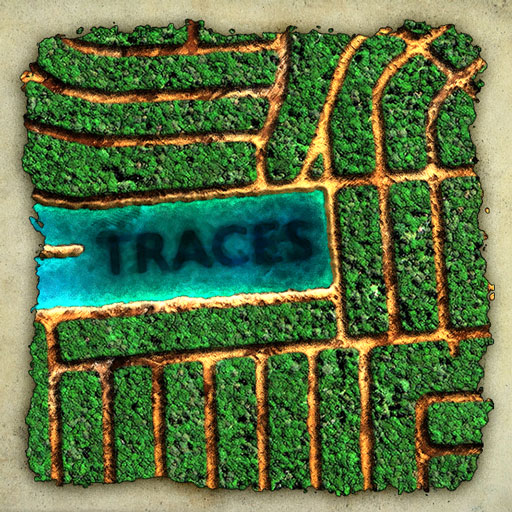
For the last several months I’ve been working on some music. It’s a weird collection of stuff, but I think some of it is worth a listen. It’s primarily electronic and almost 99.9% instrumental, with just a few vocal samples thrown in. I believe my favorite piece is Traces, which is a 17 minute ambient piece I composed using sounds I recorded in nature.

song cover artwork

The cover for Traces, my first piece of ambient music.

None of this work is “mastered” in any way, and much of it is simply a work in progress that I’m satisfied with for now. Maybe someday an expert could help me turn this into something even more than that, but for now, it’s a very relaxing form of artistic expression that makes me feel creative.

I hope you like it as much as I’ve enjoyed making it!

Check out the playlist for my “album” Future Null Infinity over on SoundCloud and feel free to leave some comments, here, there, or both!

Here’s the link to my SoundCloud page if you just want to check out the whole thing at once: https://soundcloud.com/duositex

Text Me

If you’ve ever called me, and I didn’t answer, don’t take offense. I don’t like the phone. If I want to speak to you, I’d rather do it face-to-face. If I want to communicate with you, I’ll do it however is most convenient.

Years ago, the way to communicate with someone when you couldn’t (or didn’t want to) do it in person was to send a letter, or send someone to say the words for you.

After that we invented the telegraph. You could talk to someone without writing a letter or going to see them. Note that people didn’t stop writing letters.

Then they invented the phone and the radio to speed up communication. This was a great success, but being able to put your thoughts in writing carefully ahead of time were still not replaced.

Along came the Internet. Finally, instant communication with the benefits of radio and letter writing combined. I no longer need to speak to someone face to face, and they no longer need to wait a week to hear from me. We still write email instead of using Skype or FaceTime.

Don’t call me. It’s a waste of time. Not because I don’t like your voice, but because your words are easier to respond to when they’re written down. Honestly, when people are talking to me, my mind wanders to the next topic. Speaking is slow, like hand-writing things. And I’m bad at it. Give me a second to collect my thoughts and maybe I won’t sound like such a jerk.

That is all.

Adobe Creative Cloud and the New Renaissance

Adobe has always lead the industry when it comes to graphics software. Photoshop is the defacto standard in image editing, to the point of being a verb. Their video editing software, Premiere, and their vector graphics editing tool, Illustrator, are equally as influential in their respective markets. But Adobe’s software has always been expensive. A suite of their products can set you back $1,500 to $2,000 easily. The result has been rampant piracy of the software among those who refuse to plunk down a month’s pay for some bits and bytes. The lost sales must be incalculable; the damage to Adobe’s bottom line, irreparable. Or is it?

Continue reading

Google Fiber Rollout Becomes Real

Like many bandwidth-starved American nerds, I’ve been following the rollout of high-speed fiber-optic networks across the United States relatively closely. These networks are generally designed to be scalable long into the future, offering increased bandwidth as optics technology improves and demand rises. However, the data shows that the demand for faster networks in the United States already exists. And while this county has the world’s largest economy, it seems as though we truly are behind the curve if the Google-powered fiber-optic broadband network launched in Kansas City, Missouri has turned so many heads.

Continue reading